

Problem library
Garage Door Off Track
An off-track door is a structural problem, not an opener problem. The single most important thing you can do is stop pressing buttons, because every cycle bends something new.
Stop The Door. That Is Step One.
Unplug the opener or pull its plug from the ceiling outlet. Not just the remote, the power. A door that has jumped its track is being held by cables, rollers, and whatever is still bolted straight, and a motor pulling on that mess is how a panel gets creased or a bracket gets ripped from the wall.
Keep people and cars out of the opening while the door is in this state. Park in the driveway, not underneath.
How A Door Leaves Its Track
Doors do not wander off their tracks for no reason. Nearly every case traces back to one of these:
- A lift cable snapped or unwound from its drum, dropping one side of the door.
- A roller stem broke or a bearing seized, so a wheel stopped rolling and started dragging.
- A vehicle bumped the door, or the door closed onto a bike, trash can, or ladder.
- Track brackets worked loose from the framing, letting the rail spread away from the door.
- The door was already out of balance from a tired spring set and was running hard for months.
Which one it was matters. A realignment that ignores the cause is a repeat visit waiting to happen.
Read The Door From A Safe Distance
You can gather useful detail without touching anything. Stand inside, several feet back, and note what you see. Photograph it if you can.
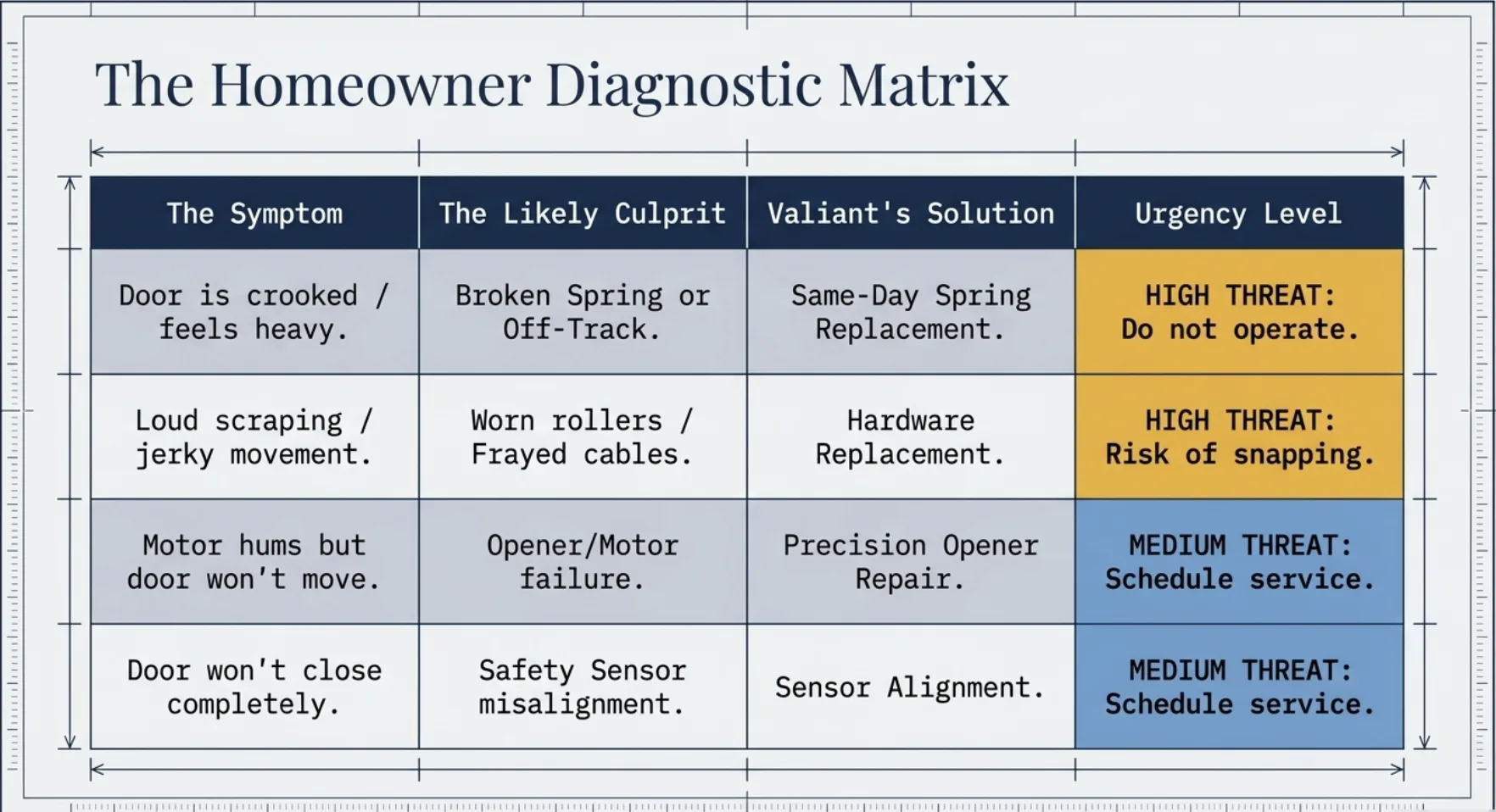
| What you see | What it usually means |
|---|---|
| One top corner pulled inward, door leaning | Cable failure or drum slip on that side |
| Rollers out at the curve of the track | Bent radius section or loose bracket |
| Gap between the door edge and the track | Track spread away from the framing |
| A section bowed or creased in the middle | The door was forced while jammed |
| Cable loose and looped on the floor | Lost tension, door weight is unsupported |
Cable And Drum Tension Is The Hidden Half
Both lift cables have to carry the same load and wrap evenly on their drums. When one cable is loose, short, or off its grooves, the door hangs crooked and the rollers on the low side get pushed sideways until they pop out.
Setting that right means locking the door in place, releasing spring tension in a controlled way, reseating the cables with matched tension, and re-winding the springs. This is the part of the job that puts a wrench in a loaded shaft. It is not a homeowner task, and it is not a good place for a general handyman either.
If a hanging cable is what you are looking at, our broken cable guide covers what fails and why.
The Structural Inspection A Real Repair Includes
Getting the rollers back in the rails is the visible part. The parts that keep the door there are less obvious:
- Vertical and horizontal track sections checked for dents, twists, and flattened lips, then reformed or replaced.
- Every track bracket and lag bolt checked into solid framing, not just drywall or a split jamb.
- Rollers replaced in sets so all wheels sit at the same depth and roll freely.
- Hinges and end stiles inspected for tearing, since a torn hinge mount will let the door walk out again.
- Door balance tested by hand at several heights after reassembly.
- Opener force and travel reset, then the safety reverse verified.
Why Forcing Movement Costs So Much More
A door held by a good frame and correct hardware distributes several hundred pounds evenly. Once it is off track, that load concentrates on a couple of rollers and one bracket. Running the opener adds a few hundred pounds of pull to that same point.
The common result is a repair bill that grew: one bent rail becomes two rails and a section, or a cable job becomes a cable, drum, and panel job. Doors that come to us untouched after the failure are usually the ones we can put back into service the same visit.
Securing The Opening Until A Technician Arrives
If the door is stuck open, treat it as a security issue. Lock the interior door to the house, move anything valuable out of the garage, and if the door leans into the driveway, place a cone or a trash can so nobody walks into it in the dark.
Do not prop a leaning door with a ladder or a two-by-four and then walk under it. Props slip. A door that is already unbalanced can shift without warning.
What To Tell Us When You Book
Say whether the door is open, closed, or stopped part-way. Say whether it leans, whether a cable is hanging, and whether a vehicle is behind it. Add the approximate width and whether the door is insulated or solid wood, since weight changes the approach.
Photos of both lower corners, the spring shaft, and the point where the rollers left the rail let us load the right rollers, brackets, and track sections before we drive out. Same-day service is often possible depending on technician availability, route, schedule, and parts on hand, and clear photos improve the odds. See off-track repair for how the visit is structured.
Related Repairs
Off-Track Door Questions
Can I push the rollers back into the track myself?
We do not recommend it. The door is held by cables under load, and freeing one roller often releases tension that shifts the whole door. Bent track lips also need reforming before a roller will stay seated.
Why did my door come off track in the first place?
The usual causes are a snapped or slack cable, a broken roller stem, a door hit by a vehicle, loose track brackets, or something left in the door's path. A technician should identify which one, or it will happen again.
Is an off-track door an emergency?
Treat it as one when the door is stuck open, leaning, hanging by one side, or blocking a vehicle you need. A leaning door has unpredictable load paths and can drop.
Does an off-track door mean I need a new door?
Not usually. Many doors go back into service with new rollers, reformed or replaced track sections, and corrected cable tension. Panels with creased end stiles or torn hinge mounts are the cases where replacement becomes the honest recommendation.
Ready For A Clear Next Step?
Call (925) 409-4974, request an appointment, or start an instant estimate with photos.